

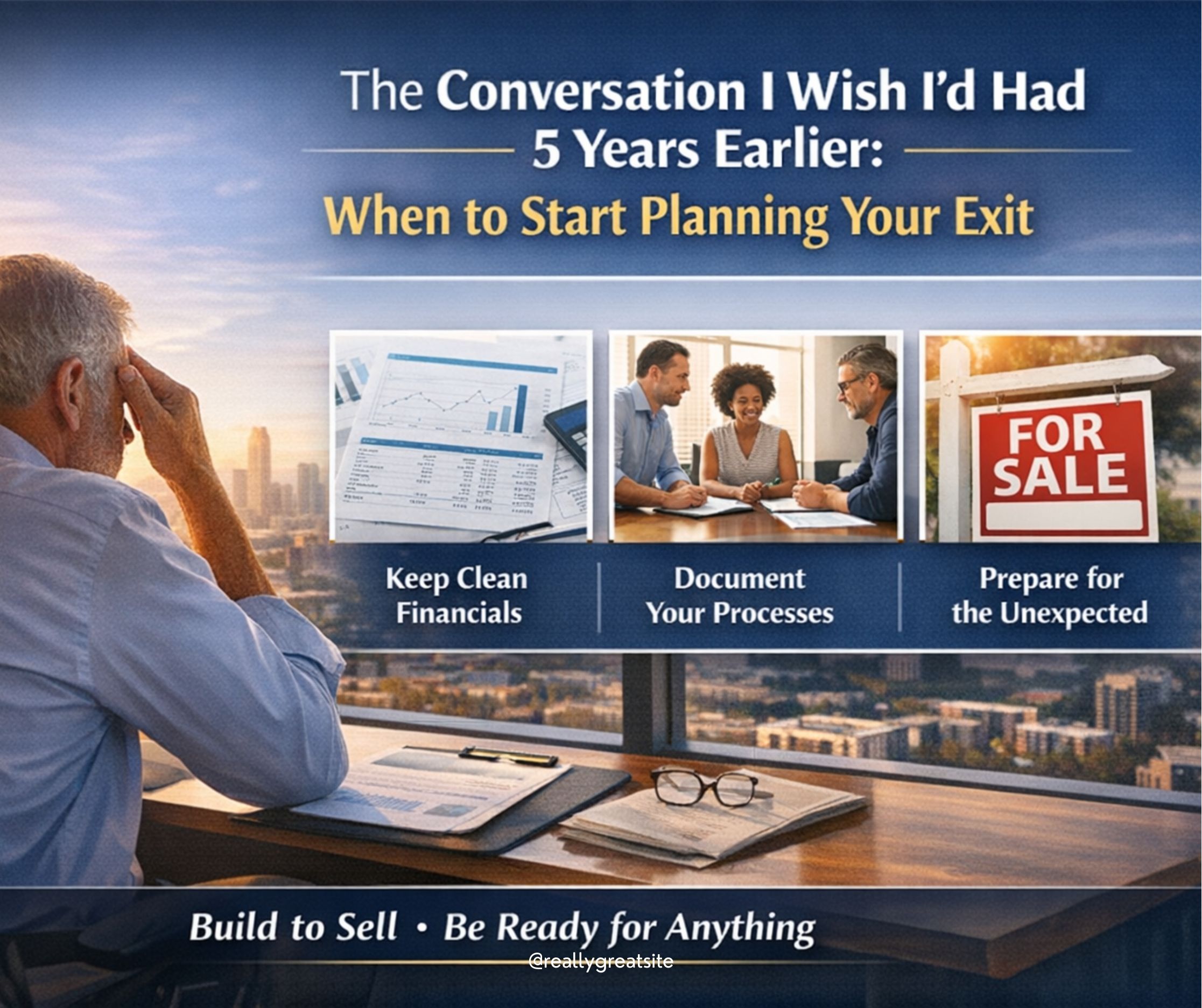

The Conversation I Wish I’d Had 5 Years Earlier: When to Start Planning Your Exit
I still remember the call from Michael. It was a Tuesday afternoon, and he sounded exhausted.
“I need to sell,” he said. “My cardiologist says I need to slow down. How long will this take?”
Michael owned a successful HVAC company in Marietta: twenty-three employees, solid revenue, great reputation. On paper, it should have been an easy sale. But as we started digging into the details, my heart sank.
No current financial statements. No documented processes. Key employees near retirement. A lease expiring in eight months.
“You will need six to 12 months to have your business ready to sell,” I told him, trying to sound optimistic.
His face fell. “My doctor wants me to retire by the end of the year.”
The Truth Nobody Wants to Hear
Here’s what I’ve learned on my journey: the time to start planning your exit is the day you start your business.
I know that sounds unbelievable. You’re just trying to get customers in the door, make payroll, and survive year one. Why would you think about selling?
Because life happens. Health issues. Family emergencies. Unexpected opportunities. Burnout. And when those moments come, you want to be ready—not scrambling.
Michael and I eventually sold his business, but he left about $200,000 on the table because buyers could smell the urgency and see gaps in his operations.
Build to Sell From Day One
The most successful exits I’ve seen? They’re from owners who built their business so that someone else would eventually run it.
That doesn’t mean you’re not committed. It means you’re smart.
Keep clean books from the start. Don’t mix personal and business expenses. Work with a good CPA. When buyers review your financials, they should be spotless.
Document everything. Write down your processes. Train your team. Build systems. If you’re the only person who knows how things work, your business is worth less.
Diversify your revenue. Don’t let any single customer represent more than 15-20% of your income. It’s risky for you now, and it’ll scare away buyers later.
Think long-term. Sign leases with renewal options. Make sure supplier agreements are transferable. These details matter when it’s time to sell.
An Exit Strategy Isn’t Giving Up—It’s Smart Business
Some business owners hear “exit strategy” and think I’m telling them to plan for failure. That’s not it at all.
An exit strategy means you’re building something valuable. Something that could run without you. Something someone else would want to own.
And here’s the thing: a business built to sell is also a business built to succeed. The same things that make your company attractive to buyers—strong systems, great financials, a solid team—make it more profitable and less stressful for you right now.
Last year, I worked with Patricia, who owned a marketing agency in Buckhead. She’d been running her business with an exit in mind from day one. When a larger agency approached her with an acquisition offer, she was ready. The deal closed smoothly, and she walked away with a price that exceeded her expectations.
“I never actually planned to sell this early,” she told me. “But I’m so glad I was ready when opportunity knocked.”
Start Today
Whether you opened your business last month or twenty years ago, it’s not too late to start thinking like someone who’s building to sell.
Pick one thing this week. Clean up your QuickBooks. Document a key process. Meet with a CPA who understands business sales.
The best business decision you’ll ever make is building something valuable—whether you sell it next year, in ten years, or never.
Common Questions About Exit Planning
Q: I just started my business. Isn’t it too early to think about selling? A: It’s never too early to build good habits. You’re not planning to sell tomorrow—you’re building a valuable, sustainable business that gives you options down the road.
Q: Won’t having an exit strategy make me less committed to growing my business? A: Actually, it’s the opposite. Businesses built with an exit strategy tend to be more profitable, more organized, and less dependent on the owner. That makes them better for you now and more valuable later.
Q: I’ve owned my business for 15 years and never thought about this. Is it too late? A: It’s not too late, but you’ll need to be intentional about getting ready. Start with your financials and documentation—those are the two biggest areas where established businesses often have gaps.
Q: What if I never actually want to sell? A: That’s fine! But having the option is powerful. Life changes, opportunities arise, and health issues happen. Being ready means you’re in control of your choices, not forced into a bad situation.
Let’s start the conversation….